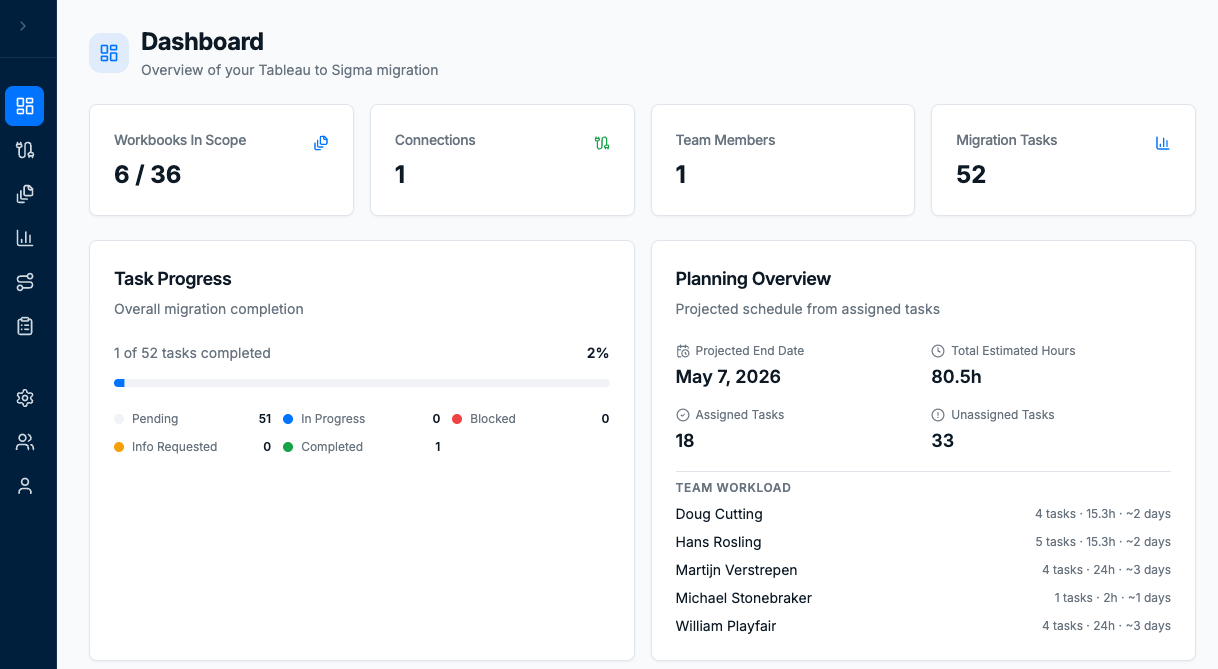
DDBM Migrator: Tableau to Sigma
A migration from Tableau to Sigma impacts your entire BI environment: existing dashboards, data sources, users and processes. The DDBM Migrator brings structure to that. Not an automatic conversion, but a comprehensive planning tool that ensures you go into the migration with a solid plan of action.
Content Inventory
Know what you have
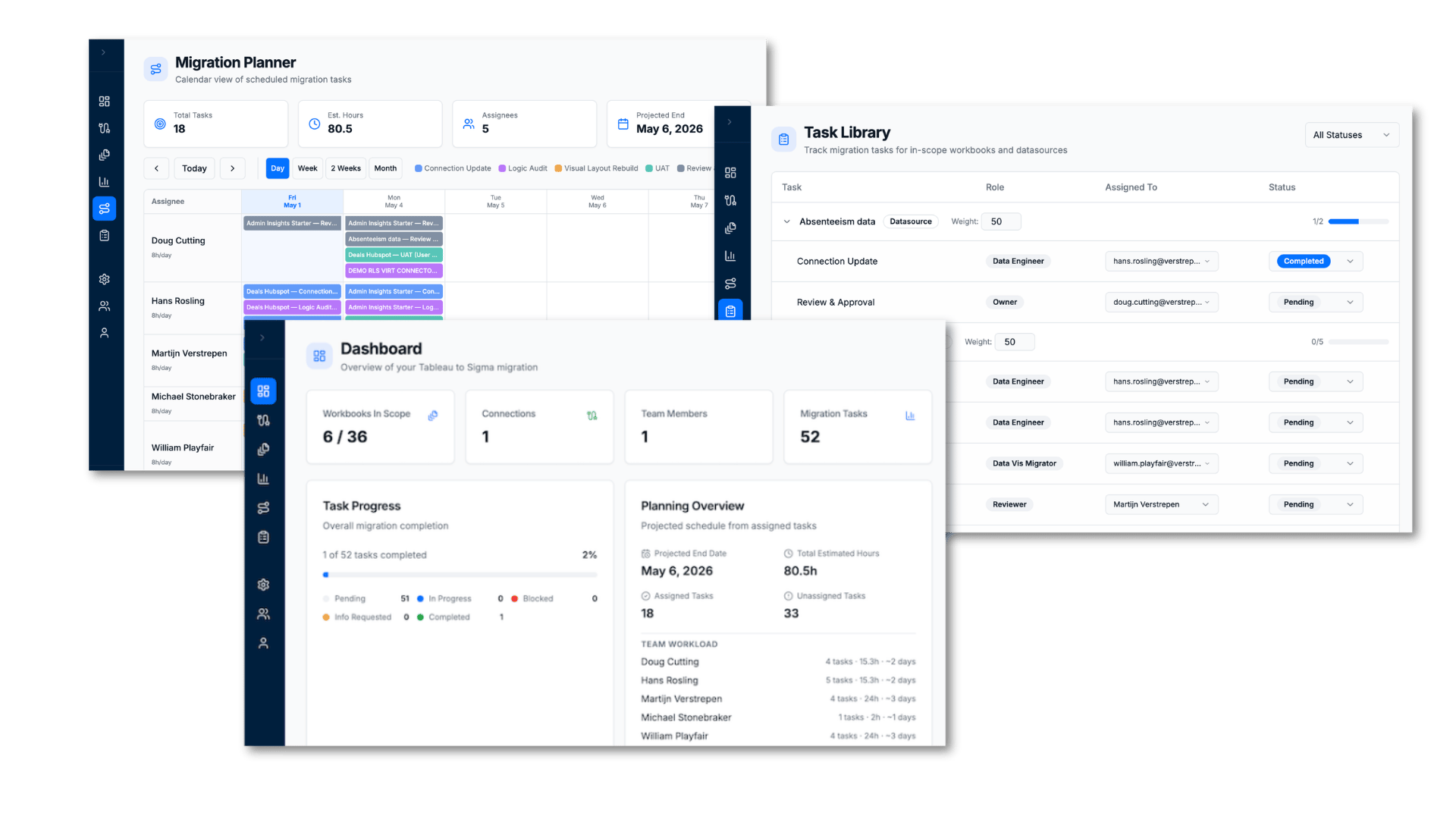
Before initiating a migration, you need complete visibility into your current Tableau environment. Content Inventory automatically reads your environment and provides a complete overview of all your workbooks, data resources, projects and users.
For each workbook, you can see who owns it, how often it is used, when it was last accessed and its technical complexity. So you know immediately what the actual scope of the migration is - and which dashboards are really important.
Task Library
Granular Task Management
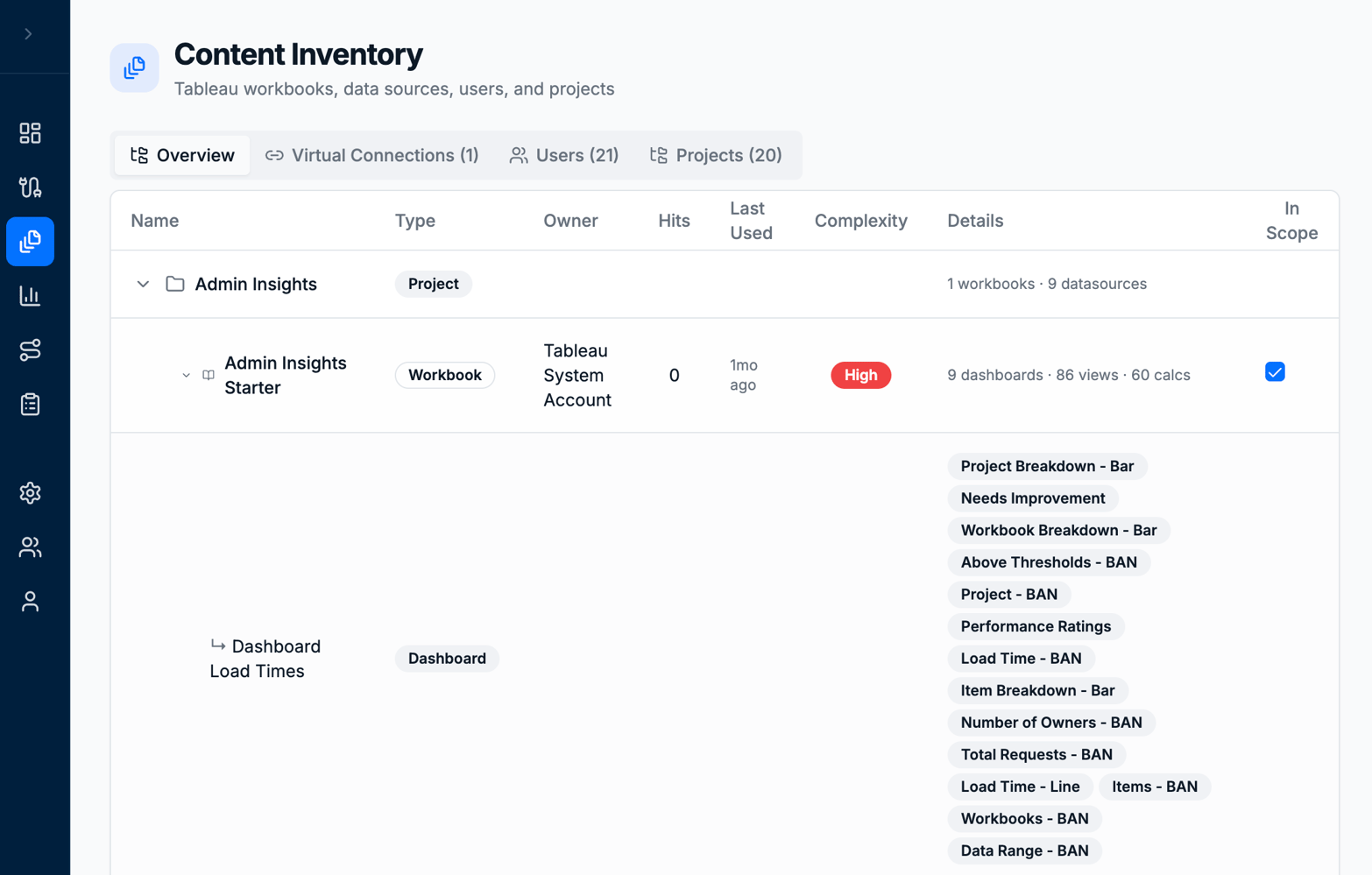
Based on the inventory, the tool generates a complete task list for each workbook and data source. Each migration task, from connection update to visual layout rebuild and user acceptance testing, is assigned to the appropriate role.
This ensures total transparency: you’ll always know who is responsible for what, track real-time progress, and identify potential bottlenecks before they cause delays.
Migration Planner
Plan your resources
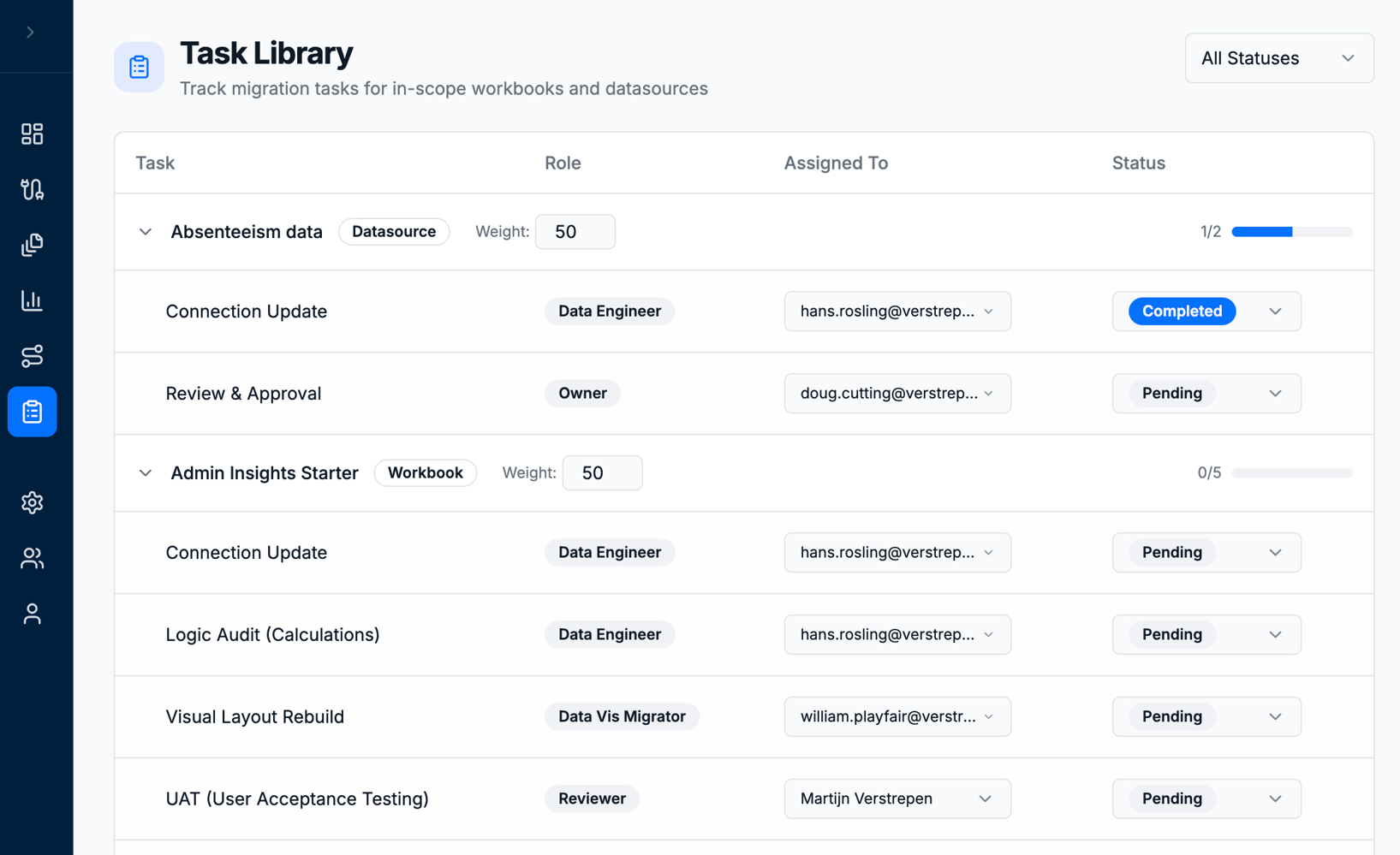
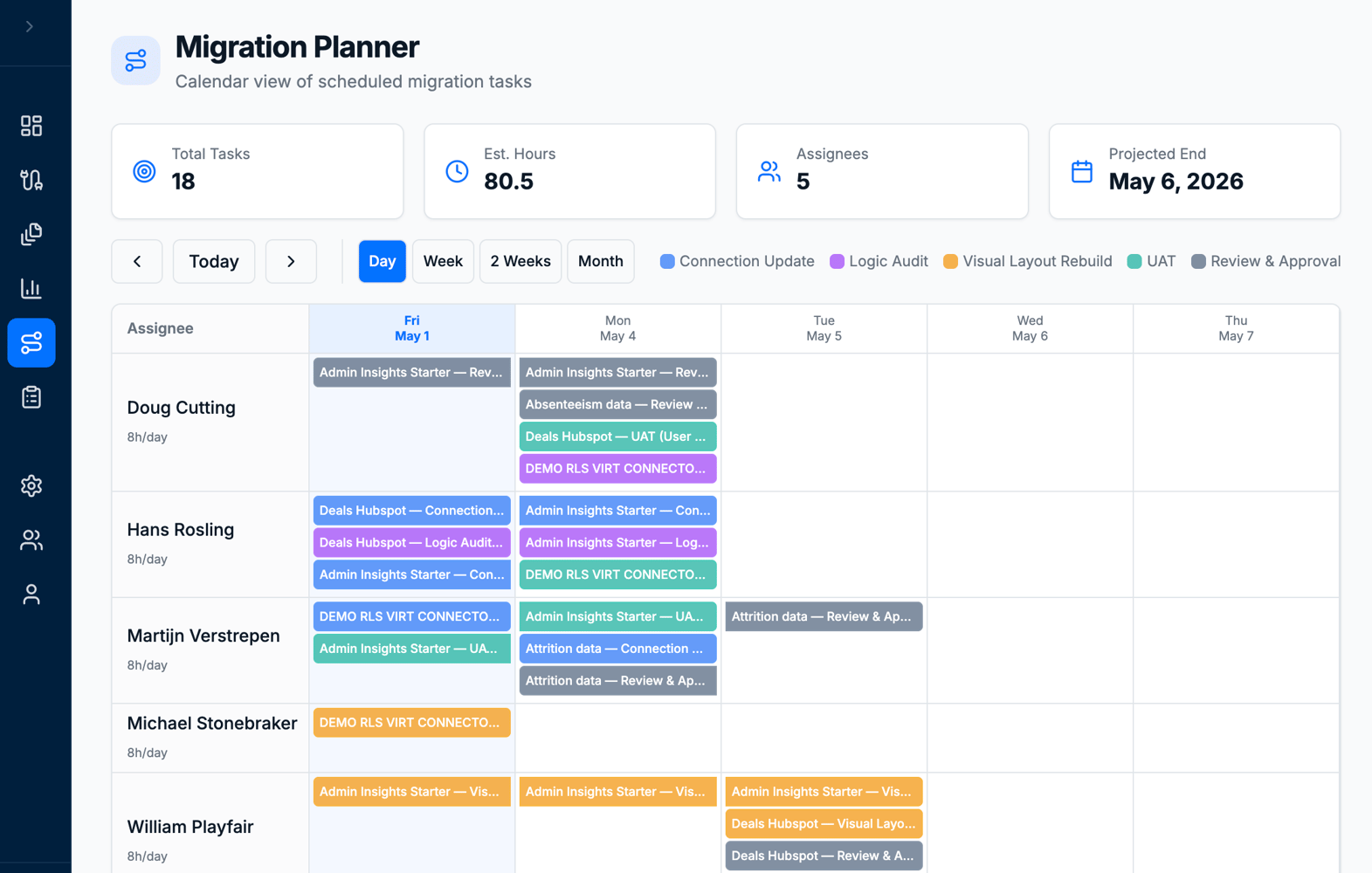
All tasks come together in a visual calendar planning per team member. You can see at a glance who is available when, how many hours the migration requires in total and whether the planning is realistic.
This prevents resource burnout by ensuring consultants and internal staff aren't over-allocated during peak migration phases.
Dashboard
Always an overview
The central dashboard provides a complete picture of the migration at all times: how many workbooks are in scope, what the projected end date is, the team workload per person and how many tasks are still open.
This empowers BI Managers to maintain control over the entire migration without getting bogged down in the day-to-day details.